Average Closet Depth: How Deep Should a Closet Be?
Average closet depth: for a reach-in closet used for hanging clothes, 24 inches of interior depth is the usual planning benchmark. It comes from the clearance garments need to hang without pressing against the door.
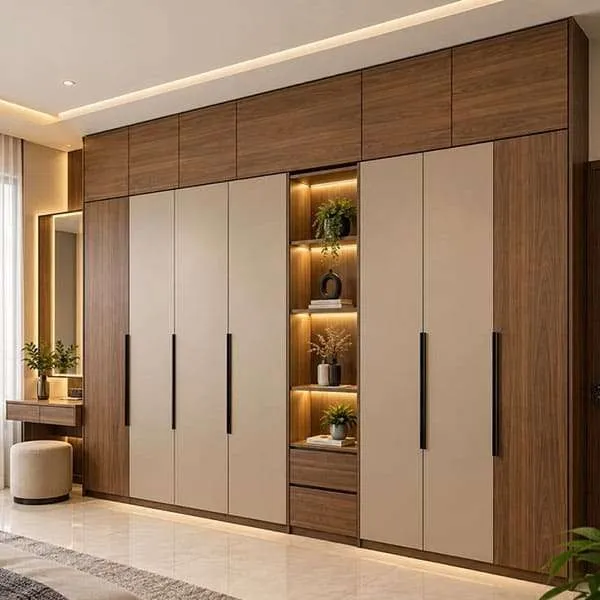
What an Average Closet Depth Looks Like in Practice
In practice, a reach-in closet used for hanging clothes is usually planned at 24 inches of interior depth. In a walk-in, each hanging side needs enough depth for garments to hang clear of the aisle and the opposite storage. Depth is measured inside the cabinet, from the back panel to the inside face of the door. It shifts with rod direction, door type and what is stored. Read these figures as general industry guidance rather than a George specification for any order.
Rod direction drives the number. A rod parallel to the back wall lets garments face the door, the arrangement most people picture, and it needs the full depth. A rod on a side wall turns garments sideways, so the closet’s width carries the layout and the depth can shrink. Door type matters too: hinged leaves swing into the room, sliding panels run on a track inside the opening, and bifold panels fold back in pairs.
George makes custom hinged wardrobes, sliding door wardrobes and walk-in closets for residential and commercial spaces, with size, layout, materials, finishes, door styles and storage configuration set from the buyer’s own drawing and room dimensions. Design examples sit on the wardrobe pages. George’s wardrobe FAQ estimates production at 25-35 days after order confirmation, depending on the specific order.
Normal Closet Depth in Homes
In real homes, measure usable interior depth from the back panel to the inside face of the door, then check the layout against the hangers, garments, rod orientation and door clearance. Older or tighter builds may have less depth, and the layout has to adapt. Shelf-only closets — linen cupboards, hall storage, pantry-style units — are shallower because folded stacks and boxes need no hanging clearance.
Going shallower has a visible consequence. Measure the hangers and garments you actually use; a closet much below the usual figure leaves the shoulders of garments touching the inside of the door or the sliding panel. Clothes crease along the shoulder line, sleeves catch as the door closes, and the space feels crowded even when the rod is only partly full. A deep-enough closet often stores more than a wider shallow one.
Where the recess is fixed, the layout adapts: side-wall hanging, a shallow shelf run, or drawers under a short hang. Closet shelving systems suit the shallow end of the range, where boxes and folded stacks replace a rod, and open shelving keeps a closet usable at a depth that would pinch coats.
Closet Depth Standard
There is no single mandatory closet depth that applies worldwide. What exists instead is general planning guidance: a reach-in closet used for hanging clothes is usually planned at 24 inches of interior depth, while shelf-only storage is sized to the items being stored. Metric and imperial conventions describe the same target in different units.
| Closet type | Common interior depth | What it suits |
|---|---|---|
| Reach-in, single rod | 24 inches | Shirts, jackets and trousers facing the door |
| Walk-in, each hanging side | Depth for garment clearance | Full-length hanging with a walkway between |
| Coat closet | Deep enough for long coats | Bulky coats and long garments |
| Shelf-only storage | Sized to the items stored | Linen, boxes and folded stacks |
| Accessory and linen | Sized to small items | Shoes, bags and small items |
Local building codes can set minimums of their own, and they vary by city and by dwelling type. As general planning guidance, check the proposed interior depth against the hangers, garments, rod orientation and door clearance rather than relying on one number. Confirm the local figure before fixing a standard for a project.
Closet Minimum Depth
For adult garments hanging facing the door, treat 24 inches of interior depth as a starting point for a reach-in closet. Check the clear depth against the actual hangers, garments, rod orientation and door hardware; whether a shallower closet works depends on those details. For shelf-only storage, size the depth to the folded stacks, boxes or accessories being stored. These figures are planning benchmarks, not fixed targets: a closet at the bottom of the range leaves little room for error in the door or the hardware.
Rod direction changes what the number has to do. Side-wall hanging is limited by the closet’s width rather than its depth, so a shallow but wide closet still hangs a full run of clothes. Door style sets the front clearance: hinged doors need swing room in the room, sliding doors need a track and panel stacking space inside the opening, and bifold panels fold and can project in front of the opening during operation, so check the selected hardware and panel clearance.
Depth for a Closet Rod
The depth for a closet rod follows from the hanger, not from the shelf. A rod center is usually set so garments hang centered in the space, and you should measure the hangers and garments you use. Add the door or the sliding track and the interior needs around 24 inches to keep shoulders clear as the door closes.
For double-hang sections, where an upper rod and a lower rod share a vertical run, the upper rod is set high enough above the lower one that shirts and trousers each get their own band. Front clearance follows the door: a sliding track and its panels take space inside the opening, while a hinged door needs room outside it. A shelf above the top rod uses the same footprint and adds folded storage without extra depth.
Coat Closet Depth
Coats are bulkier than shirts, so a coat closet needs enough interior depth for the coats being stored and for the door or sliding panel to close without pressing them; a reach-in hanging closet is usually planned at 24 inches, but check the actual coats. Long coats need a rod height that keeps hems off the floor; check the longest coat. Depth is measured inside the cabinet and excludes the door, and the shelf above the rod sits in the same footprint, so the figure covers both.
Entry coat closets need enough depth for the coats actually stored and for the door to operate. Where the wall depth is fixed, a side-wall rod or a shallower shelf-and-hook layout is the alternative: hooks and a shelf take hats, bags and scarves without needing hanging clearance.
Door choice carries weight in a narrow entry. Bifold closet doors fold in pairs, and the folded panels can project in front of the opening during operation; check the selected hardware and panel clearance against hallway clearance. George makes bifold door closets to the buyer’s preferred design. Sliding doors work on the same principle, with panels running past each other on a track.
Standard Reach-In Closet Depth
A standard reach-in closet is usually planned with 24 inches of clear interior depth for hanging clothes; the overall depth depends on the selected door assembly. The typical run is laid out as a single rod with a shelf above it: hanging below, folded storage above. Bifold or sliding doors change the allowance; check the selected door assembly and how it operates.
Whether a walk-in layout fits depends on drawing the storage runs, the clear aisle and the door and drawer operation; it is not set by a single depth threshold. George makes custom walk-in closets and a U-shaped walk-in closet system, and the walk-in closets pages show how the hanging sides are set out.
In a made-to-measure wardrobe, depth is quoted to the buyer’s own drawings and dimensions, so it can follow the recess instead of rounding to a stock size. George discusses quality checks on dimensions, materials, appearance, function and packing before an order, and the inspection criteria and records are agreed for each order. Minimum quantities and customization options vary by product; quantities, drawings, prices and included services are confirmed before the order.
Closet depth questions
How deep does a closet need to be minimum?
Treat 24 inches of interior depth as a starting point for adult garments hanging facing the door, and check the actual hangers, garments, rod orientation and door hardware. Shelf-only storage is sized to the items being stored. A shallower space may be better given over to shelves, hooks or drawers than to a rod if the garments would lose the clearance that makes hanging worthwhile.
How should I divide a closet into storage zones?
Start with what you actually hang and fold, then allocate long hanging, short hanging and shelving in proportions that fit those items. The split is a planning choice, not a fixed rule.
Start with the garments and folded items you own, then allocate long hanging, short hanging and shelving to fit them. A household with mostly folded clothing or a large shoe collection will want more shelving, and a made-to-measure layout can follow the real mix.
Is a shallow closet deep enough for hanging clothes?
A reach-in closet for adult garments hanging facing the door is usually planned at 24 inches of interior depth. A shallower closet can still work for shelf-only storage, children’s clothing, or side-wall hanging where the closet’s width carries the layout; check the hangers and garments you use.
Sources
Request a quotation
Describe your project, the rooms involved and your timeline, and we will reply with options and a quotation.
Or write to sales@customwardrobesupplier.com